2012 saw FRS17 and IAS19 corporate pension deficits rise by over a third to £550 billion. Despite some brief optimism in late summer annual deficits ended the year 36% up. The recent rally of the FTSE failed to help companies, many of which will be reporting on their balance sheet their worst pension deficits ever.
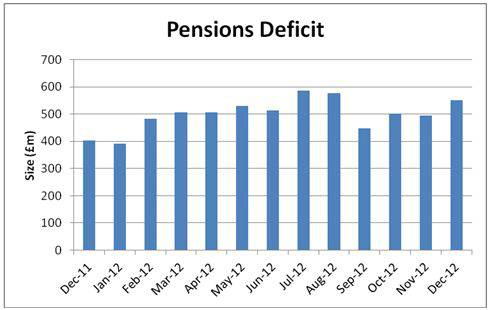
FRS17 and IAS19 corporate pension scheme deficits
Source: Xafinity Corporate Pensions Scheme model, based on all UK DB pensions and using FRS17 and IAS19 accounting rules
Hugh Creasy, Director at Xafinity Corporate Solutions, said: “Looking forward, 2013 looks like it will be an equally difficult and uncertain time and corporates will need to think carefully about the choice of assumptions and what is right for them. While discount rates for the more mature schemes may be falling to around the 4.5% mark, the discount rate of around 5% can be justified for many. An increase of just 0.5% may not sound much, but this would slash the liability measure by 15% - enough to remove the deficit on the balance sheet and wipe out pension charges in the profit and loss account.
Recent mortality data also offers schemes some leeway in terms of predictions with the news that mortality rates in 2012 were actually 1% higher than the previous year. Direct recognition of the experience in just one year will not have much of an impact, but if it tempers the allowance built into actuaries’ projections over the decades to come, the effects will be warmly welcomed by finance directors.”
|